Showing posts with label Folk Music. Show all posts

Thursday, July 2, 2015

On a mission to save our music

Båliphonics

Sri Lankan born Dr. Sumudi Suraweera, from the University of Canterbury, New Zealand talks to The Nation about his research on Sri Lankan Low-Country traditional drumming
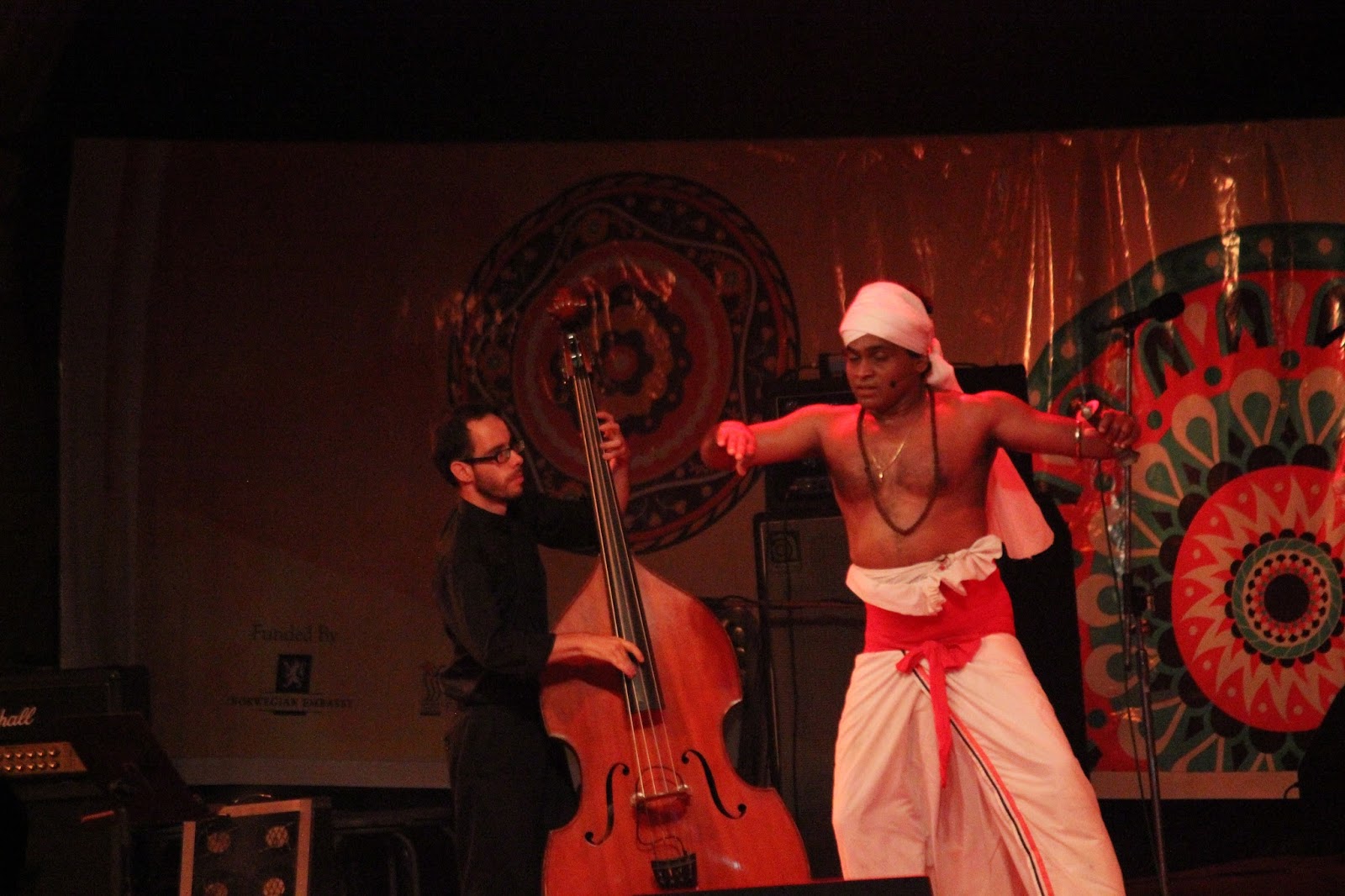

Baliphonics at JMF Pic by Sakuna M Gamage 


Sri Lanka is one of the few countries with a very vast and rich cultural diversity. The culture is itself very unique and thereby contributes to the Sri Lankan identity. Ancient customs, traditions and rituals hold great significance. Among these Bali, Thovil, and Shanthi Karma have been integral parts of Sri Lankan culture from pre-Buddhist era, which nurtured dark arts for thousands of years. Although, even if the remains of such rituals are practiced in almost all parts of the country, its survival is not guaranteed. 
  
These rituals are believed to serve specific purposes. Based on this point, one may argue whether it’s righteous to practice these rituals without a specific cause. “In fact this is one of the major criticisms we get,” says the founder of the Båliphonics group Dr. Sumudi Suraweera. Båliphonics presents the music of the low-country Båli ritual tradition of Sri Lanka in a sublime collaboration with contemporary jazz and improvisation. Båliphonics group is a part of Musicmatters collective. Established in 2010, Musicmatters introduced an alternative model for Western music education in Sri Lanka.
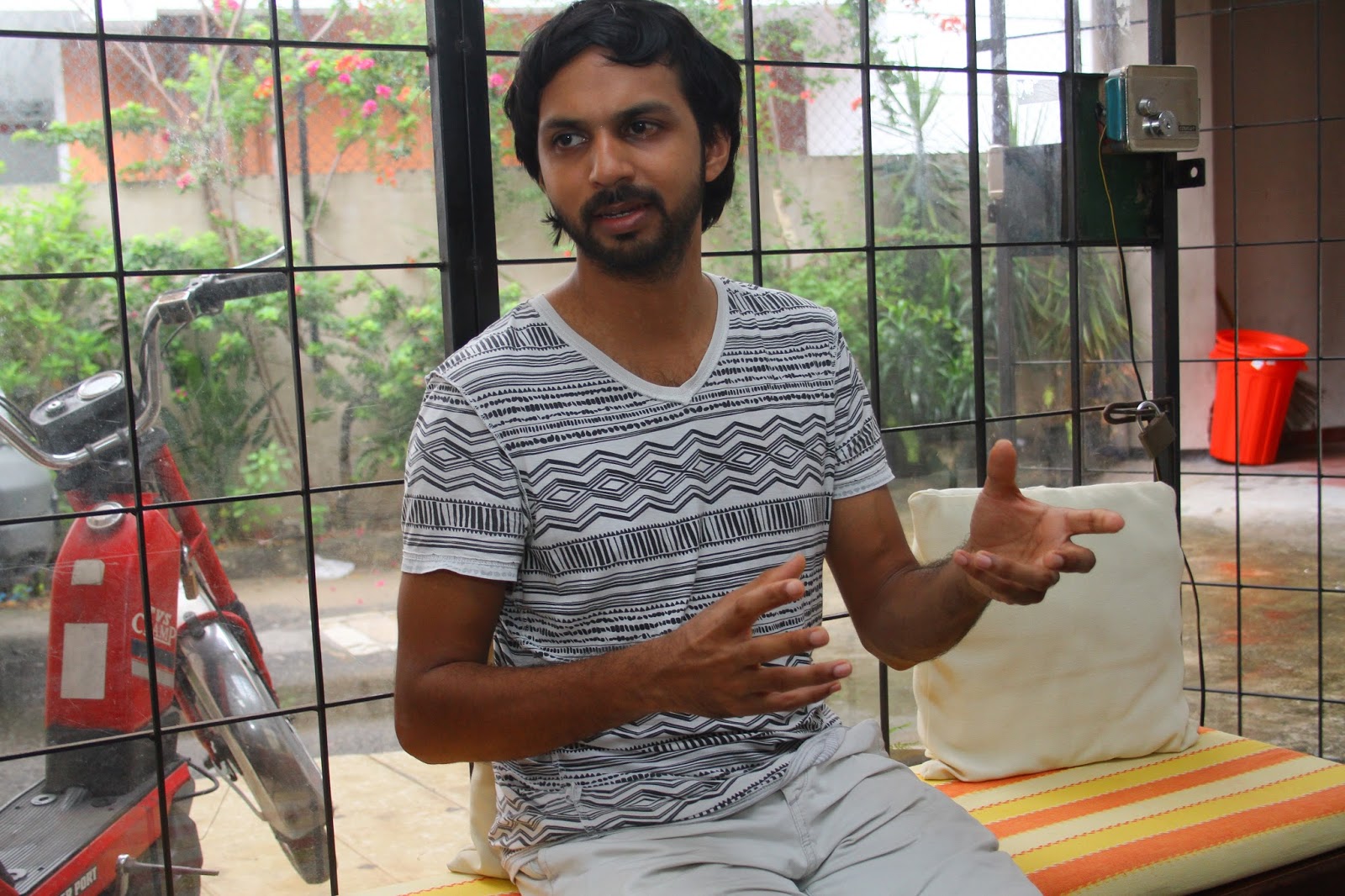
Dr. Suraweera Pic by Ravindra Dharmathilake

“I’m not sure how practical it is to watch these rituals and the rich music components which come along with it being forgotten. Our attempts are not to reenact these rituals, but to attempt to save the components we can save.  This is not to degrade the values of these rituals,” he said. “If the rituals die, music in it will die with it,” he emphasized.   

Fusion between Sri Lankan traditional music and Western Jazz music, as Sumudi said, is the way he is trying to find his identity. Young Sumudi moved to New Zealand with his parents when he was 13 years old. While he was in Sri Lanka he was a student of Colombo D.S Senanayake College.  Even though they moved to a foreign country, Sumudi said that his family always embraced the Sri Lankan culture. As a child he always adored music, and this was the reason behind why he chose music as his field of study following his strong passion towards music in high school and university.
He said that he adored jazz music and recognized that he expressed himself at best with jazz drumming. Suraweera obtained his PhD in the discipline of ethnomusicology in 2010 from the University of Canterbury, New Zealand focusing his research on Sri Lankan Low-Country traditional drumming.

Speaking about the research he carried out he paid his respects to his main consultant for the research, late Sandoris Jayantha Gurunnanse. He also remembered maestro Piyasara Shilpadhipathi who supported him throughout his research work. As he said, limited resources were one of the main challenges he faced in collecting information. ‘It was not a simple process,’ he said pointing out that this is also a reason why these rituals should be preserved without waiting.  

Båliphonics was also initiated with Sumudi’s research studies.  As a Sri Lankan who grew up in New Zealand, he believes that he has adapted to the diversities of both cultures. Although he grew up among New Zealanders, his passion for his mother country didn’t die. He reiterated that what he does now, is a reflection of his identity nurtured by two countries. Båliphonics group itself is a representation of this fusion. Two brothers, Susantha and Prashantha Rupathilake voice traditional chanting for the music provided by Isaac Smith and Dr. Sumudi Suraweera with double bass and the drum kit respectively.

Sumudi fondly remembered Eshantha Pieris, cofounder of Musicmatters who is currently abroad studying for his doctorate, who used to play the piano for Båliphonics. Smith, who has volunteered at Musicmatters as an instructor since 2010, is Sumudi’s colleague from New Zealand. He said that, Smith too is now well adapted to the Sri Lankan culture that he is quite absorbed in it.

Båliphonics has also performed outside Sri Lankan context at several occasions. They have toured in Malaysia and Singapore with this novel form of Sri Lankan traditional music and Sumudi is content about the feedback they’ve received. “Båliphonics were very well received and they were mesmerized by our performances,” he said adding that our traditional performances are sometimes seen magical in the foreign context.

Båliphonics, recently performed at the Jaffna Music Festival, succeeded in mesmerizing those gathered at the Jaffna Municipal Grounds too. Although the performance at the Jaffna Music Fest was time bound, he said that a usual performance of Baliphonics takes more than one hour and that it has a nice flow that encapsulates the audience.

Musicmatters’ main responsibility is the music institution located in Borella, where they conduct music programs for children to enhance their individuality and ensemble performances with a touch of theoretical knowledge. Since its inception, Musicmatters has earned a reputation for its enjoyable and practical approach to music providing its students with the opportunity to be creative and innovative. In contrast with the local music curriculum, Sumudi mentioned that students of Musicmatters are assessed for their creativity more than their theoretical knowledge.

“Our method goes beyond the traditional exam-oriented education system,” he explained while explaining how their students are assessed by their performance at the end. Speaking further about the music curriculums in the country, he criticized the local music curriculum for lack the spontaneity and creativity. As he said, “Music offers a lot more than other forms of entertainment and is transferrable to other components of education”. This is why building creativity and spontaneity in children is important.

Other than the music institute and the Baliphonics, Sumudi considers organizing the annual Musicmatters music festival as an important duty of the collective.  This year Musicmatters festival will be held in August for the fourth consecutive time.  Sumudi explaining the goal behind organizing this festival said that it’s done with the aim of promoting Sri Lankan music in the western world as well as to expose the Sri Lankan audience to music that is generally not accessible through mainstream media.  Various artistes from Germany, Australia, Singapore and United States of America will be among the usual participants.

“Our hope is to give Sri Lankans some kind of inspiration through this to be open to what they weren’t open before. And ultimately open up their minds in whatever the field of work they are engaged in, to challenge their accepted notions and to strengthen their thinking,” Sumudi iterated that experiencing various forms of music can inspire an individual to think outside the box.

Wednesday, November 19, 2014

The sound of folk song grows soft


Recently, Visharad Wasantha Madurangani successfully staged her folk music concert at Viharamahadevi Open Theater celebrating 25 years in the field of music


“Now I can die in peace. I have the feeling that I have done something for my country. That’s the most important achievement of Sanda Saawi Maa - Folk Song Concert,” Visharad Wasantha Madurangani said. She is a student of late Maestro Lionel Ranwala and mostly familiar with the Sinhala song audience through Ranwala group’s folk songs and her solo ‘Sanda Saawi Maa.’
Last week, she successfully staged her folk music concert at Viharamahadevi Open Theater celebrating 25 years in the field of music. Almost thousand folk songs were sung on stage for 24 hours continuously by Madurangani and her team. The concert was a free and open event for all. “The initial plan was to sing 1000 folk songs, but we ran out of time,” she said. “During these 25 years, I have always tried to do the best I can for Sinhala folk music. This is why I still couldn’t do a CD. This is why I planned to invite all music lovers free of charge for the concert,” she said. “Doing the concert for free was not an easy task, but I saw this as an opportunity to bring folk songs into the limelight again.”
Magurangani is from Athurugiriya. “I entered the field in 1990. I met my master, Lionel Ranwala back in 1980s. I was only 15 years old when I joined his Lama Jana Gee program at Rupavahini. I met him at the preliminary dance examination and he invited me to join the program. I think he identified my talent,” Madurangani said. She said that she should be grateful to all her teachers for what she is today including Lionel Ranwala. “My first music teacher was the music teacher at Bibilegama Maha Vidyalaya. I learnt Hindustani music under maestro B Victor Perera and then mastered playing the violin under Ajith Jayaweera sir,” she recalled.
Madurangani said that she is also thankful to Lionel Ranwala for introducing her to media, due to which she first got the opportunity to sing for a Television program under his guidance. “I gradually developed a taste for folk music and songs and along with it my interest grew. By 1990 I was a permanent member of the Jana Gee team,” she reminisced.
She spoke further about her master, Lionel Ranwala who passed away twelve years ago due to an accident. “He was successful in introducing Sinhala folk tunes and melodies to popular Sri Lankan music without damaging the original tune, exemplified by his songs. I don’t know why the media only remembers him and his songs during the Aluth Avurudu season,” she expressed her grief. She believes that Ranwala was a better teacher than an artiste.
“He was a great artiste; he was an exceptional teacher. I have never seen any other teacher more capable of understanding his or her students. When I was a student I used to wonder how he did it, but now I sometimes try to guess how he did it when I face difficulties with my students,” she said. Madurangani teaches music at her art institute Thimanjala in Athurugiriya. “He always taught us how to face different situations as he taught us music. He shaped our personalities.”
Madurangani was Ranwala’s student for twelve years. She also spoke about Thaalama Foundation and the folk singers group. “Earlier we didn’t have a team as such. Whenever we get an invitation to sing, he would send us a postcard with information about rehearsals,” she recalled how keen he was that students took part in rehearsals on time and RSVPed to the postcards he sent. “We didn’t have phones to communicate. It was postcards and letters. He made sure he sent us information early enough.”
She also called to mind how people were reluctant to give real value to folk singers when they wore cloth and jacket for their performances. “People were unwilling to except cloth and jacket with high regard. People in the city seemed to condemn this, maybe they thought folk music and songs were only for the village folk,” she said. “Then Sahan Ranwala, Ranwala mater’s son joined the team and made a few changes in the appearance of the singers,” she said that Sahan Ranwala indentified how to tackle media in approaching the audiences with folk music. “That’s how Lionel Ranwala Folk Music Group was established.”
She further expressed her grief at contemporary media that they still don’t give high regard to Sri Lankan folk music. “I am not sure whether it is the misfortune of the country or folk music and songs. Folk music is limited to the Auvurudu season. Maybe they are unaware of the varieties of music and the depth of the subject,” she opined. Although with the introduction of television, cassette player and radio folk songs were played frequently and demand was created. However with the commercialization of the media field these become unpopular. “I believe media should be held responsible for the folk song loosing popularity,” she rebuked.
Madurangani pointed out that people are being limited by days like Mothers’ Day or Fathers’ Day. “Media asks us to love our parents only one day a year. Likewise they’ve limited folk music to the New Year season,” she said.
She identified four steps to promote folk music. Firstly, experimental research should be undertaken. Secondly, research findings should be turned into creations and then those should be checked for quality and standards by specialists. The final creation, melody or song should be promoted via media; mainly, radio or television. “Although the first two steps are well under way, media doesn’t seem to do their part,” she reiterated. “We do our best to preserve this genre. But I’m afraid folk music will go extinct.”
She said that not everyone has a taste for folk music or songs in society. “I remember Ranwala master quoting Ven. Anagarika Dharmapala that one day when Sudda leaves he will leave a whole horde of Kalu-Suddas in the country. Maybe this is what has happened. There are ‘Sinhala’ people who can’t seek entertainment in our folk songs or literature,” she emphasized. She also said that it’s those Kalu-Suddas who demote the standards of aesthetic amusement. “The problem here is that people who desire high quality aesthetic amusement are the quiet lot. They don’t voice their demand. People who desire low quality amusement are always ready to rebel for what they desire,” she opined.
She emphasized how musicians in India are keen on developing their folk melodies. “They always admire local forms of art. Experiments are done with modern technology, where they try to get the maximum benefits,” she said. “We may not have as many folk melodies as India, but our melodies are varied enough that we could use them if we develop them further,” she reiterated. “It’s a shame that we always try to nurture and promote all things foreign.”
She also mentioned that the school curriculum should also include more folk music and songs for children to study so that they will develop an interest in the field. “If not for the book Hela Gee Maga by Dr. Makuloluwa published in 1959 the Education Department won’t have any reference material for folk music. To date, the only songs included in the syllabus are of the melodies in this book,” she reiterated. She also said that her next goal is to compile a book of songs and music chords consisting of the songs they sang at the Sanda Saawi Maa concert.  
Her most popular song, Sanda Saawi Maa was written by veteran lyricist Sisira Dissanayaka and music was composed by Ranwala sir using Vessanthara Viritha. “Sisira Dissanayaka came to one of our rehearsals with the song and wanted to see how it was. Ranwala sir showed how to sing it and asked me to sing. I don’t know how, one try and I was able to memorize the song and sing. Although it was not written for me they decided that I should sing the song,” Madurangani spoke about the song loved by many. She compared the Vessanthara Viritha and the song, exemplifying how strong Sinhala folk melodies are in addressing emotions. “If a Sinhala person can’t feel these melodies, a folk song or a traditional drum beat, I don’t know what to say except ask them to get their blood checked,” she said mockingly.

Pic by Chandana Wijesinghe