Showing posts with label Profiles. Show all posts

Saturday, March 28, 2015

Voice behind ‘Dosthara Honda Hitha’

Interview with artiste Parakrama Perera


Not many will recognize Parakrama Perera by his name. Not many will recognize him from his picture on this page. Yet, for someone who has watched early Rupavahini cartoons dubbed in Sinhala, his voice will not be unfamiliar. ‘Puru puru, Maalu katta dan api wada pataaan gannayi yanne’ , ‘Bibili nagina belikatu...’ – these phrases, with their unique voices, are forever etched in our minds. It was Parakrama Perera who voiced these characters. He was the Poos Lokka in Pissu Poosa, Doctor as well as Chaw-Chaw in Dosthara Honda Hitha and Captain Hadock in Tintinge Weera Kriya. This would suffice as introduction, but these are just a few characters he voiced, loved by thousands.
Born and raised in Suduwella, Colombo 10, Parakrama started his journey as a child artiste in Children’s programs of Lama Ranga Pitaya at Radio Ceylon, since one of his relatives took him there, to make his childhood dream come true. As a child Parakrama loved listening to radio and wished one day he could visit Radio Ceylon to observe how the voice he listens to through radio comes to his house. Later he received the opportunity to work as a dubbing artiste under veteran Titus Totawatte. As a young artiste he was able to gain recognition for his talents through Madol Doova Radio Drama, playing the role of Jinna. Kuhubuwo, Nandi Wishala, Handiye Gedara and Landesi Dupatha were among the popular radio dramas he contributed to, early in his career.

“I enjoyed playing the roles of Handiye Gedara Nawarathnam and Vandabona in Jiljona and Vandabona very much. Both stories were loved by their listeners and those characters were highly appreciated,” he recalled. “Taking part in radio programs during this period was like attending a university. Veterans like Karunarathna Abeysekara, Chithrananda Abeysekara, Prabha Ranathunga, Nanda Jayamanne, Siril Rajapaksha, Madawala S Ratnayake, Sugathapala de Silva and Dayananda Gunawardana were our gurus. They guided us so well that we were able to build our careers.”

He first met Martin Wickramasinghe following an invitation to visit him at his home as an appreciation for a job well done in voicing Upali and Jinna in Madol Doova radio drama. Rohana Siriwardana, whom Parakrama mentions as his ‘mango’ friend in the field, played the role of Upali.
His late colleague Premakeerthi de Alwis was a sensitive topic for Parakrama. “He called me Para,” he recalled. “Although I was not as competent as he was in presenting programs, he chose me as his partner in the second studio for some of his programs. It brings me to tears when I recall how good this man was to me.”

Taking about Prem actually brought Parakrama to tears. “His mother and mine were good friends and I remember an incident where we all went on a trip to Kataragama,” he recalled an incident when he accidently erased a news making picture Premakeerthi took.
During this period Premakeerthi was a journalist for the Visithura Newspaper. He captured a picture of a janitor who was on his ways to clean a toilet with a bucket of water. He does an incomplete job. Knowing this, another follows him with another bucket of water. Prem noticed this and was able to capture this after waiting for a long time. “He asked me to hold on to the camera and went away. I didn’t know how to operate the camera but I wanted to try to take a picture of our mothers cooking for us. Unfortunately, I have pressed the button while the same film was on, and Prem’s news picture was destroyed. I thought this would ruin our trip. But he was a sensitive man, he understood my immature need,” he said.

It was on Premakeerthi’s suggestion that Totawatte invited Parakrama for Rupahavini dubbing. Apart from Pissu Poosa and Dosthara Honda Hitha, he voiced Captain Hadock in Tintin, and other notable characters in Gulliverge Suvisariya, Situwara Montha Kristho, Nothradamaye Kuda, Malgudi Dawasa, Oshin and Senehase Ayithiya. He also mentioned his colleagues Saman Athawudahetti, Karunathilaka Handuwala and Rohana Siriwardena, Geetha Kanthi Jayakodi and Neranjala Sarojini with much affection.

He also spoke highly about Athula Ransirilal, who follows in the footsteps of Titus Totawatte. “His commitment to the field is extraordinary. It’s a blessing to have such people or else the quality of dubbing as well as the field itself would collapse,” he said. He went on about how the hard work of Ransirilal had enriched the locally produced cartoons. He specifically mentioned the recent cartoon programs Kumara Gee, Sunil Gee as well as Tomiya saha Kitiya, Andarege Katha and Pancha Thantraya. “These cartoons are created and produced locally. Therefore, I believe that these are better for our children as it brings out Sri Lankan essence,” he iterated. “It’s nice to see Sri Lankan productions on television. We have been watching foreign cartoons for a long time,” he added.
He also spoke about the new dubbed Asian television dramas telecasted in Rupavahini. “All these are carefully selected dramas with great story value. It is no surprise that people love these,” he said adding that they are now working on another new drama named Siri meti Siththarawi which is woven around a Korean legend who lived in the 16th Century.

Although he was a voice artiste, his fulltime career was at Colombo Municipal Council. He retired from his job as a supervisor recently after a service of 42 years. A felicitation ceremony was held two years ago, to appreciate his service to the CMC as well as a dubbing artiste. He currently works as a consultant to the voice training institute, ‘Voice of Sri Lanka’. “Voice training is essential for an artiste. But for a person who doesn’t have an inborn talent this will be a difficult task,” he said. He also said that the demand for skilled voice artistes are now less compared to the era in which the field was established. “New technology allows unskilled people to come off as skilled,” he said, expressing his grief over the lack of demand.

He pointed out that the recognition a voice artiste receives is less compared to the recognition received by actors. “People don’t recognize us when they see us, they barely remember our names. Satisfaction comes with the love they express for the characters we voice,” he said. If the voice artiste has not done an exceptional job, the audience would not fall in love with the characters they voice.

Pics by Ravindra Dharmathilake

Friday, March 27, 2015

An actor’s philosophy which revolves around image

Renowned artiste Dharmapriya Dias talks us through his acting career which is dotted with many accolades, including the award for the Best Actor for his role in Hyena at the State Drama Award in 2003


Award winning actor Dharmapriya Dias believes that a fine comedy play is not merely an act which makes people laugh at low grade jokes and impersonation of famous personalities or speaking dirty.
“I don’t understand why people should laugh at mistakes made when speaking a foreign language or insults made on another human being. Saadaya Marai - Salli Hamarai doesn’t fall under this category. This is an attempt to create meaningful humor without using profanity or laughing at the expense of one’s culture,” Dias told The Nation while speaking about his latest stage play direction Saadaya Marai Salli Hamarai adapted from the farce Funny Money written by the British Playwright Ray Cooney.
Dharmapriya is known in the field for his commitment for acting. According to him he has been committed to acting from school days at Piliyandala Madya Maha Vidyala. “I was curious about acting since I was very young. I always wondered how children got to play different roles in Vesak Dramas played near Kesbewa Wewa. I wanted to know why I couldn’t play a role,” he recalled how he enjoyed theater as a child.
Young Dharmapriya was confused why the king from the Vesak play rode a bicycle to work. “The person who wore jewelry and shimmering costumes on Vesak day, went to work wearing office attire. This puzzled me,” he said that it was under his school drama master Premkumar Karunarathne that he learnt the ABC in drama. Their work including Muthu Etaye Geethaya which won many accolades in school drama competitions. 
Dharmapriya’s firsts contribution to popular theater was in Bandula Vithanage’s Romaya Gini Gani. “Working with this drama crew was like a practical workshop for me. I learnt much about popular theater,” he reminisced. With this debut drama, he received the opportunity to work with veteran dramatists the likes of KB Herath, Jayalath Manoratne, Rajitha Dissanayaka, Neil Alas, Pujitha de Mel, Sarath Kothalawala, Chamika Hathlawaththa and Thumindu Dodamtenna.
He specifically mentioned the roles he played in S Karunaratne's Hyena, Rajitha Dissanayake’s Apasu Harenna Be, Mata Wedi Thiyanne Nadda, Thumindu Dodamtenna’s Arundathi and Thilak Nandana Hettiarachchi’s Guti Kamata Niyamithayi as the roles he mostly enjoyed playing. His critically acclaimed role in Athula Pathirana’s Dolahak is also noteworthy. 
Dharmapriya has won many awards including Best Actor - State Drama Award for his performance in Hyena directed by Chamika Hathlawaththa in 2003, Best Set Designer for Ruwan Malik Peiries’ Dasa Mallige Bangalawa (Dasa Malli’s Bungalow) in 2004, Best Choreography in his production Gehenu Lamai Weda Arambathi and Youth Drama Festival’s Assistant Actor for Lanka Ishan Kankanamge’s Sanda Sewanella in 1997. Saadaya Marai Salli Hamarai is his second stage direction while Gehenu Lamai Weda Arambathi marked his debut.
His talent for acting is not limited to the stage. He said that he still enjoys his work as a radio and television voice artiste. He began working with radio and television during the early stages of his career. He considers the opportunities he received while working with teledrama directors Nalan Mendis, Sudath Rohana and DG Somapala as blessings. “Experiences gained on stage helped me immensely in adapting to teledramas and cinema,” he explained. “Having to act in Wimalarathna Adhikari’s Ingammaruwa was an extraordinary experience in the teledrama field,” he said remembering how teledramas employed radical themes, couple of years ago
Dharmapriya was regarded as the Best Actor for his first lead in the internationally acclaimed movie Machang by Oscar nominated producer Ubarto Passilini. Dharmapriya played minor roles in Vijitha Gunaratne’s Wala Patala and two other films Bora Diya Pokuna and Nahi Werena Werani, which have been awaiting release for past several years. He mentioned that Machang was a turning point in his personal life as well as his acting career. “I used to be double the body size I am now, I had no control over eating. I didn’t give body image much importance,” he recalled how he almost missed the role in Machang. “They told me that although I am suitable for the role, they can’t give it to me since my body image doesn’t match the character. They challenged me to lose weight that if I did they would give me the role.” Not only did Dharmapriya accept the challenge and succeeded, he wound up creating one of the most celebrated roles in the recent film history. Playing his maiden major role in this internationally acclaimed movie, Dharmapriya received the opportunity to travel to many countries. He also pointed out that physical and mental well-being is essential to becoming a successful actor. “This is rare in the Sri Lankan setting,” he said.
He further said that the experiences he acquired travelling across the world made him question the situation of contemporary Sri Lankan cinema. “I observed that in many other countries acting is a respected as well as a well paid profession,” he pointed out that most Sri Lankan actors are engaged in the field part-time as artistes while doing a fulltime job in a completely different field. “I’ve heard that there was a time in Sri Lanka when such value was attached to the profession. Too bad I never got a chance to witness it,” he lamented.

Speaking further about theater productions, Dharmapriya said that there has always been a stable audience for stage plays unlike cinema and teledrama. “Audience for stage plays has been considerably stable during both good and bad times. People came to watch plays even during the period of the armed conflict. There were fluctuations, but the dramatists were able to maintain the quality of the plays.” He said that the dramatists have attempted to give the maximum to the field using the limited resources they have. “Unfortunately, facilities in theaters have deteriorated. None of the responsible parties have looked into this.  This is a very sad situation,” he emphasized.

Thursday, February 19, 2015

Miranda Hemalatha still in the tempest


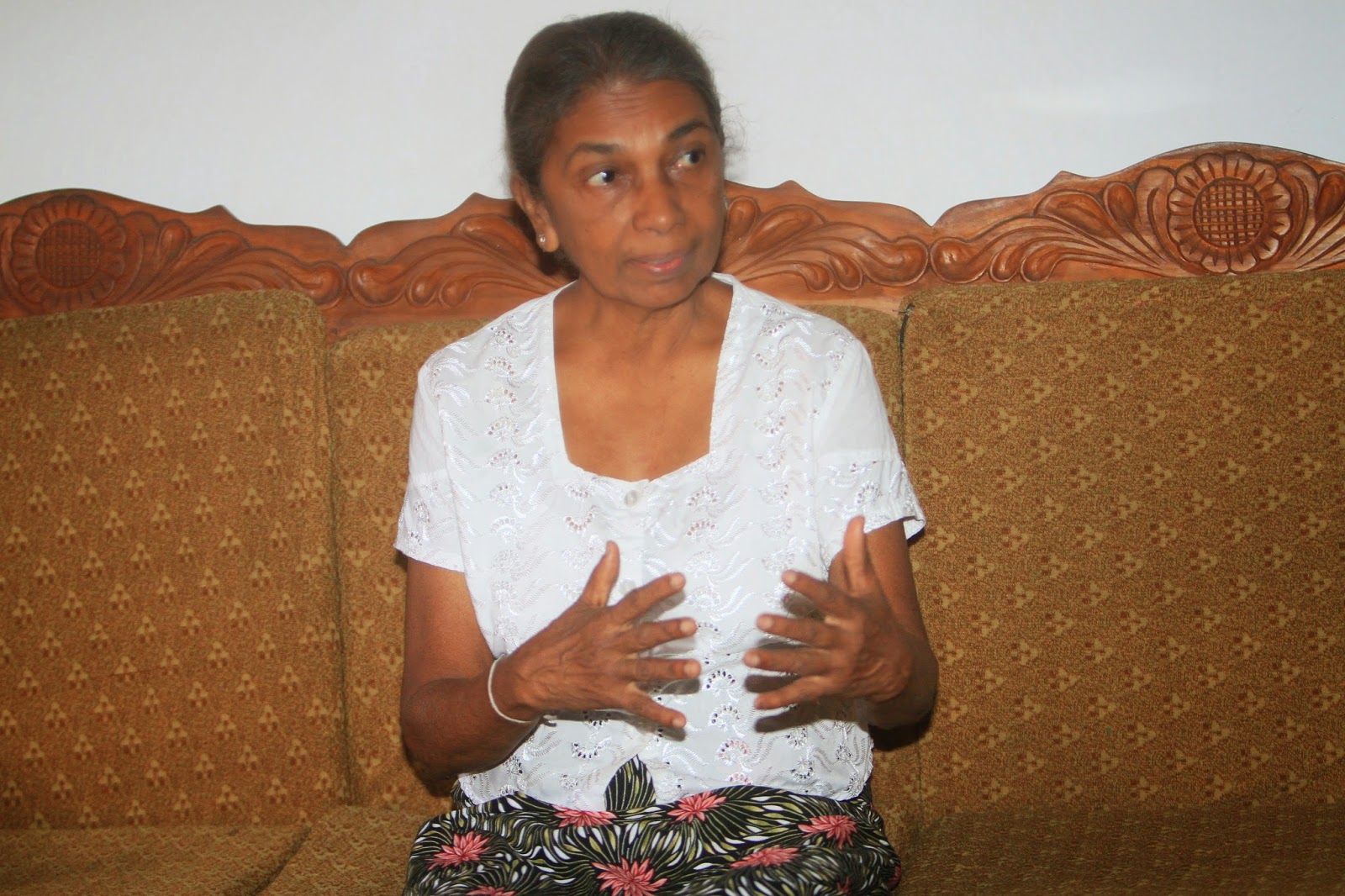
“A psych evaluation must be made mandatory in recruiting new teachers,” said educationist Miranda Hemalatha who is also an award winning dancer, actress, choreographer as well as a director of drama, in an interview with The Nation. “I recently read that about 70 percent of school children have some type of a mental disorder. If this is true, it is a segment of these students who get through to universities. A person who walks out as a teacher from a university might be a person from this group,” she noted, adding that this might result in more serious issues if overlooked now. “There isn’t a method to evaluate the mental state of people who receive appointments as teachers,” she said, reiterating the need for a psychological evaluation for teachers with the recent unfortunate incidents of corporal punishments and sexual abuse in the school environment.
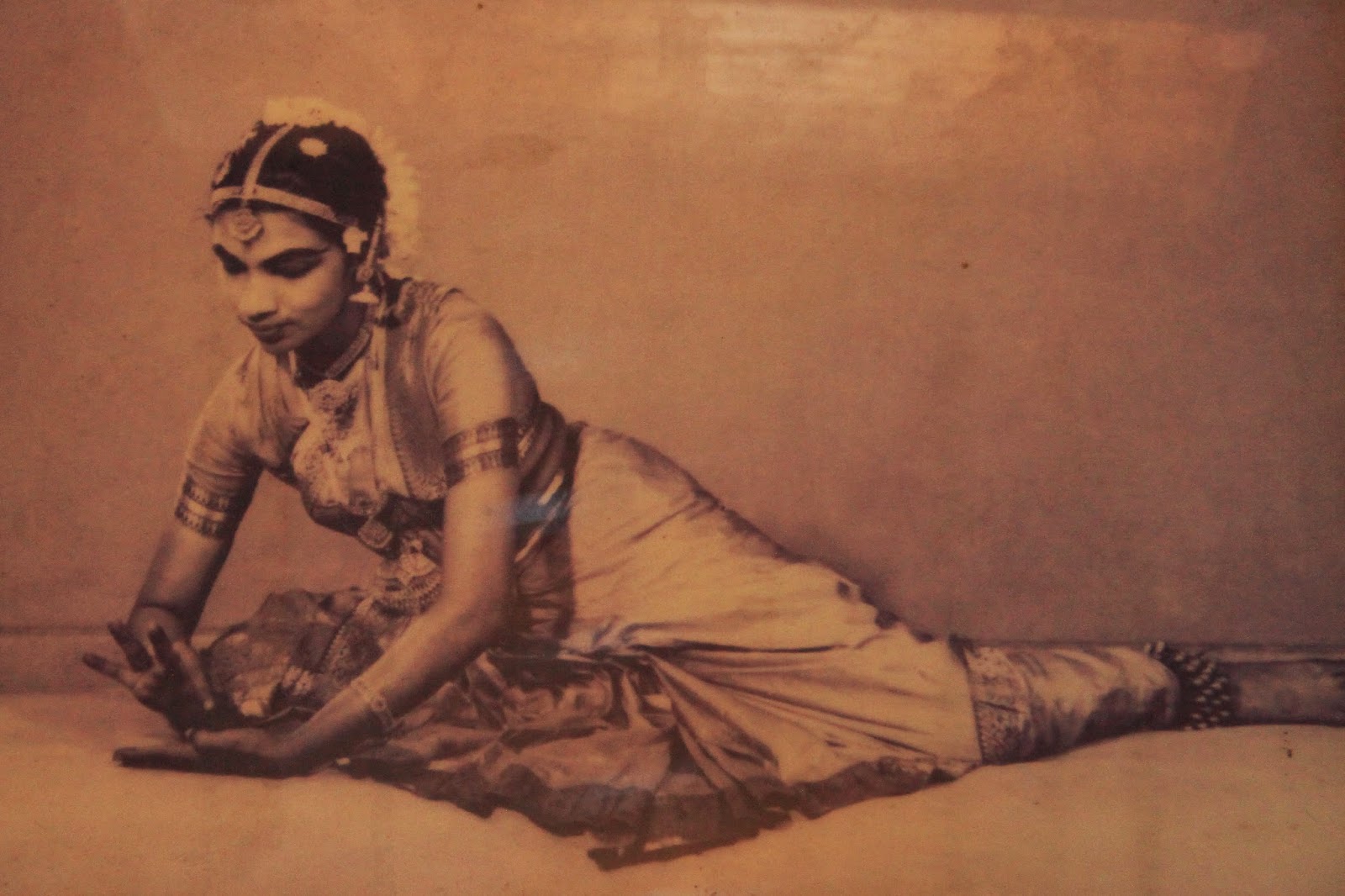
Best known for her ballets productions, Miranda has been producing dance programs, with many new production, since 1957. Ranga Dahara, Nupura Rawaya, Nritya Prasadini, Narthana Rekha, Nrithya Pushpanjalee, Ranga Leela and Narthana Pooja are a few among them. She also contributed in dramas Kadawalalu, Rathnawalie, Mati Karaththaya, Janelaya and Liyathambara as an actress.
She is known for the experimental dance dramas she produced. Vasantha Thilaka, Thanha Asha, She, Deewari Geethayam Swarna Thilaka are among the most appreciated dance dramas. She said that she has always tried to depict the destruction taking place in society through her dramas, again trying to be a rebel on stage.
Starting her professional life as a teacher in Vanathamulla Central College, Miranda gradually made her way to becoming the first Directress of Aesthetic Education in Sri Lanka. She worked for the Education Ministry for 37 years, for the Teacher Education Department for 16 years. She was in administrative service for 15 years. Today, she is the Chairperson of Diri Daru Piyasa at Kindelpitiya; an institute for the Down Syndrome children who seek assistance to enter society as independent individuals; and Miranda Hemalatha Kala Ashramaya.
She was just five years old. It was a Thaipongal Day, she remembers, when she saw a wonderful dance by a small Tamil girl at Hettimulla tea estate where her father was working as a superintendent. “I was amazed by her steps and I still remember how I wanted to dance like her,” Hemalatha, now in her late 70s recalled what inspired her to learn dance. When she was young, dancing was belittled by people of high caste. Therefore, she did not receive the blessings of her family when she chose to study dance. “My parents were fond of singing; we used to sing playing Serpina in the evenings. But they didn’t consider dance as a respectable profession,” she said.
While receiving school education from Panadura Good Shepherd Convent, she applied for the dance course in College of Fine Arts (Rajaye Kalayathanaya). Out of the thousands of applications received, she was fortunate to be accepted as one of seven students who received admission in 1954. Some say that the university struggles commenced in 1961. Yet, Miranda claimed that the first university rebellion was in 1957 which resulted in the appointment of the Kularatne Commission.  
“As a student, I was annoyed at the corruption and how people took advantage of the troubles faced by students at the College of Fine Arts. We formed a group and went to the parliament to meet the Prime Minister. We sat on the staircase of the parliament and swore that we wouldn’t get up till we met him,” she reminisced how they were promised what they asked for; a commission of full authority over the Fine Arts College.
She also remembered the service rendered by the late Sri Lankan ballet master, Premakumara Epitawala and renowned musician Sunil Shantha. “Situation of our arts field would have been worse if not for people like them who committed themselves to their work,” she said.
Miranda was a rebellious character at the university, at work as well as an artiste. She fondly recalled the memories when she put herself in trouble trying to do the right thing. “I always say that I am Miranda in The Tempest, Shakespeare’s play. I’m always in a violent windy storm and I always will be. Miranda is still in the tempest,” she laughed.
Meanwhile she also took classes under veterans Shesha Palihakkara and Ganganatha Master to study Barata Natyam, Kathakali and Manipuri dance. “If we were to rebel we had to become strong and confident in the subjects we study. Therefore we all became committed to studying the subjects in depth,” she said. Going to India as the first Colombo Plan scholar in 1963, Miranda’s Arangetram in India had been organized by the leading Indian musician Maturai Krishnon.
She believes that the stigma of dancers in society lifted with the international recognition Sri Lankan dance received. Yet, she said that with the emergence of the television this established reputation started to deteriorate again. “Dance we see today on television is not meant for aesthetic sensations. It aims for something else,” she condemned the semi-nude costumes used by most dancers.
“We cannot blame the private TV channels. They are money oriented. Yet, the two national television channels can’t telecast everything without control. They depend on people’s money. They have to give what is best for the people, without following private media blindly,” she emphasized.
Miranda criticized the artistes who sided with political parties for their personal benefits. “Although I didn’t get on stage in any political party meetings, I believe that I have done my part for the country as an artiste,” she claimed. She believes priests and artistes should not get involved in party politics, they should always consider themselves beyond.
She stressed the importance of nurturing a child’s personality and pointed out how the current education system disrupts the development of personality instead. “If a child’s personality is nurtured, he or she will grow up to be a youth with high self-esteem and self-respect and will have a strong backbone,” she said. “Unfortunately, their personalities are being destroyed from the beginning”.
Speaking further about the personality of the youth today she brought up a conversation among a group of university students, which she happened to overhear. They were having a discussion about new job appointments and they weren’t certain whether those who have maximum qualifications will get the jobs. “I heard one saying that this is their fate. I was shocked by this response, that they were ready to take up anything given to them by the authorities. Should this be the response from the youth?” she raised a question. “They don’t have the courage to fight for their rights. This is one of the reasons behind the downfall of our country,” she added.
She expressed her sorrow at the university and school education system. “University is a place where a student seeks knowledge with the guidance of lecturers. It is sad that today, there are university students who have never set foot in the library while being undergraduates,” she said adding that once the child’s personality is crippled through the school education system it cannot be reconstructed through university education.
She pointed out the weaknesses in the school curriculums, teachers’ manuals as well as the school based assignments and practical tests. “Some of the officials who write teachers’ manuals have third class degrees. How can you make people with third class degrees responsible for education?” She noted that reforming the education system in the country will not be an easy task. “I hope the new government will not repeat these mistakes,” she said.

Miranda reiterated the necessity of a control in selecting teachers for schools as mentioned earlier in the interview. She also said that practical training programs for teachers also play an important role in shaping a successful teacher. She remarked that it is important that the school examinations and administration are in responsible hands. “Without producing a generation of qualified teachers, it will be impossible to redevelop the education system of the country,” she stressed. 

Pic by Ravindra Dharmathilake 

Wednesday, February 18, 2015

Blurred brush strokes

Interview with veteran cartoonist Bandula  Harischandra


The main reason Sri Lankan artists, painters or cartoonists don’t get their due place in society is because they don’t stand together, opined veteran artist Bandula Harischandra, one of the pioneer cartoon storytellers in the country, in an interview with The Nation. “It’s a shame as well as a great disadvantage that artistes of our country are reluctant to stand together. If they do, the situation would have been very different,” he added.

Bandula Harischandra was born on May 24, 1940 in Keselwatta, Panadura. He received his early education at Sri Jana Dharmaduta Vidyalaya, Keselwatta. He said that no one, including himself, was aware of the fact that he had a hidden talent for sketching. “At the school art class, I wasn’t considered a good painter until one of my teachers saw a portrait I did,” he recalled. One day in his classroom he drew the portrait of his school manager, whose picture was hung in the new school building. Harischandra just copied the image he saw during a class, which was not painting, by the way. His subject teacher noticed the distracted boy and checked his notebook to see what kept him so preoccupied. The teacher was surprised by what she saw and immediately took him to the principal, who was highly impressed by the drawing too. “If I didn’t draw the picture of the school manager on that day, I would never have become a professional artist. I would be someone else,” he said adding that this drawing was the turning point of his life. Harischandra was just 12 years old then.
The impressed principal saw potential in this young boy and introduced him to National Arts Front (Jathika Kala Peramuna)Treasurer HBP Jayawardane. The official was an eminent art teacher as well as a painter and a highly skilled sculptor. “My friend Lionel was also a talented sculptor. Both of us were given a letter to go and meet Jayawardane Master. We didn’t know what waited us, but anyway we followed the principals’ orders,” Harischandra recalled. Under, the guidance of Jayawardane Master both Bandula and Lionel studied drawing, painting, pottery painting and sculpture.
“He helped me immensely to hone my skills. He was happy about my work and eventually offered me a class to teach, which I was very happy to take up,” Harischandra reminisced. He also mentioned how he held a successful art exhibition with his friend Lionel.
Day by day the number of students grew and eventually it was proposed that they move the class to Panadura Town, to a more spacious location. They moved the class to a building near the Panadura Hospital and formed the art institute, ‘Panadura Lalitha Kalayathanaya’, in 1959. “Music classes were conducted by Mudunkotuwa Master and dance classes by Ms. Miranda Hemalatha. It was a successful institute,” he said. Later, another art teacher joined him to conduct classes as the number of students was too much for him to handle by himself. This turned out to be Henry Tennakoon, who was the creator of Samaja Samayang, the famed cartoon strip published in Lankadeepa.
Tennakoon encouraged Harischandra to draw cartoon strips and coaxed him into joining Lake House. He introduced Harischandra to MA de Silva, then Dinamina Editor. This meeting resulted in Harischandra joining Lake House to do a series of picture stories based on Jathaka Stories. Later the stories he drew for Dinamina, Silumina, Navayugaya and Sathuta became extremely popular among the readers. So far he has created over 170 local and foreign picture story books including 12 stories created on his own. Bandula became the first artist to do picture stories in color. His story Nala Damayanthie published in Silumina is considered to be the first color printed cartoon story.
Among his most popular picture stories are Nala Damayanthie, Rahas Hasna, Sinbad, Helen, Thani Tharuwa, Veediya Bandara, Dewasmitha, Pandukabaya and Sinhala Deshaya. Later he followed a two-year course in painting at the Sri Lanka Jathika Kalayathanaya (Hewood) and obtained an Advanced Diploma in Art. He has submitted many articles to various newspapers and published a book on art titled Deepa. He has also served as the chief artist and manager for Camillus Publications.
He is also reputed for his paintings for UNESCO posters, leaflets and books. The reputation he earned in creating book covers is also renowned. He has also contributed in creating a number of Sri Lankan stamps. He has worked with the Sri Lanka Philatelic Bureau for over 25 years. Harischandra is also an artist who contributes to painting Vesak lanterns. “I have also completed drawings in Kaluadamulla Viharaya in Ambalangoda and currently completing the drawings of Borella Sri Lankaramaya,” said Harischandra.
He pointed out that there were several reasons behind the downfall of Sri Lankan picture story industry. According to him, contrary to popular belief, emergence of the television is not the main reason. “Once these stories started becoming popular among the readers, people started establishing more picture story papers. Competition was high and some reputed artists kept switching from paper to paper following the highest bid for their work,” he said. Harischandra added that this led to confusions in the readers that they no longer knew which paper to read. “Some stories were halted in the middle; some were continued in other papers. Eventually the readers got frustrated,” he emphasized.
Harischandra expressed his grief saying that the National Art Gallery is abandoned without anyone reaping benefits. “When we were young there were many exhibitions at the Kalabawana. We used to go whenever there was an exhibition. Today it’s literally abandoned,” he lamented. “The art exhibitions currently held there don’t make sense to the ordinary people sometimes,” he said adding that modern art is not something everyone can enjoy at the same level.
“I’m not saying that modern art is hopeless. It is a good form of art. Yet, it fails to speak to the hearts of the local people. Not everyone enjoys a few brush strokes on a canvas,” he iterated. “If they can exhibit local paintings or traditional art once in a while, it would attract a larger audience,” he said.
He also said that enthusiasm for art and painting dropped because of lack of awareness. As he explained, authorities who are supposed to support artistes overlook the painters. “They only concentrate on performing arts like dance, music or acting. Painting is not given its due place. It is as if they don’t consider painting an art form,” he said.
He reiterated that this lack of importance bestowed on artists is a setback in tourism. “Although we don’t have a habit of buying paintings, it can be sold more easily than other forms of arts to foreigners,” Harischandra pointed out. “Yet no one is willing to promote this aspect of art,” he added.
As mentioned before, Harischandra believes that these drawbacks can also be reduced if the artists stood together. He explained that they tried to do just this once by forming the Lanka Kala Sangamaya. Exhibitions held and the programs conducted by this association were highly successful, he said. “Yet unfortunately, the enthusiasm could not be maintained,” he said. “If a program can be formed and maintained for the development of the artists, I believe that it will promote Sri Lankan art and artistes better,” he said.


Pics by Chandana Wijesinghe

Tuesday, February 17, 2015

Rodney Warnakula - Caught in a wave called comedy


 “There are dramatists who preserve their individual work. Yet, what we want is a collective system where all theater work will be preserved for the use of next generations,” Rodney Warnakula, one of the most celebrated Sinahala artistes who conquered the stage, television as well as the silver screen as an actor, producer and also as a singer said during an interview with The Nation. Warnakula made these comments when talking about the resolutions that should be brought for the betterment of the Sri Lankan arts field this year (2015). He pointed out that there is no fine method to preserve the stage dramas or stage drama songs in the country. According to him, even now it’s too late for some of the theater components to be preserved. “We at least get to see reproductions of stage plays. But what about the Teetar, Naadagam and Kolam?” he queried. “Those components too should be preserved so that it provides an example of how rich our old traditional art is,” he emphasized.
Warnakula is from Bopitiya, Ja-Ela. Receiving the primary education from Bopitiya Roman Catholic Boy’s School he entered Pamunugma Maha Vidyalaya for higher studies. His interest, while in school, was the stage because he was a much loved singer and skilled actor.   
In 1980, young Rodney received an opportunity to join the Tower Hall Theater Program. There he said that he received the greatest opportunity of meeting theater legends Anula Bulathsinhala and Lucien Bulathsinhala. “Meeting them was a turning point in my life. They invited me to act in Tharawo Igilethi in 1981. That was the first time I set my foot on the popular stage,” he recalled. Since then he has been working in the field for 33 years and has made contributions to more than 45 theater productions. These include Nari Bena, Vanisiye Welenda, Ananda Jawanika, Madura Jawanika, Guru Tharuwa, Mee Pura Wasiyo, Saranga Nawen Awith and Padada Asapuwa. Among these Saranga Nawen Awith was Warnakula’s debut stage play production.
He also spoke about his connections with the Sri Lanka Broadcasting Corporation. “I was a singer before I was an actor. Starting from school, I featured in many musical programs including amateur singer’s programs at SLBC,” he recalled. He was selected for both SLBC’s ‘Sarala Gee’ program and as a dubbing artiste. He reminisced the times he featured in the radio program Thaksalawa, mentioning how he was invited to make contributions in dubbed television programs.  He specifically mentioned that he believes that it was a blessing to work under the guidance of Athula Ransirilal in Inguru Paan Malliya,Kolikuttu Sahodarayo and Dangara waliga lapa wanara.
Warnakula’s stage roles are remembered for his remarkable voice. He is an icon in the Sri Lankan musical theater.    ‘Kumatada Sobaniye Kandulu Salanne…’ in Nari Bena,  ‘Yasa isuru pirunu thana, Siri dew du sitina thanaa ’ in Rathu Hattakari ‘Kadeta palayan Chun Chan…’ in Saranga Nawen Awith, ‘Hanika Warew Kollene..’ in Bera Handa and  ‘Sobawa de…’ in Tharawo igilethi with U Ariyawimal are some of the popular stage plays where one can hear his songs.  
He considers the opportunity he received to play the fox’s character in late veteran Dayananda Gunawardana’s Nari Bena as the greatest fortune in his career. He believes that destiny also played a role in him being selected for the character. He joined the Nari Bena crew in 1993, ten years after the play was first staged. Since then for 21 continuous years, he has played the role of the fox.
Few years into his stage career, Warnakula received the opportunity to enter the electronic media (television) and the silver screen. His first studio drama was Sutin and Martin. Gradually he received invitations to act in tele-dramas.  Among his most celebrated characters are the roles he played in Bodima, Nonawaruni Mahathwaruni, Ethuma, Sodona and Sayawana Patumaga. His character in Nana Kamaraya- a tele-drama mostly popularized through DVDs- is rated among the successful roles he played.
The debut film role he played was the character in Bahuboothayo (a Sinhala comedy). He mentioned that filming the second part of Bahuboothayo has now been completed – good news for fans who enjoyed the first part.  Sikuru Hathe is another in a series of popular films to which he has contributed with acting roles.
Although Warnakula plays many roles on the stage, he seems to be framed into similar type of characters when it comes to television and the film industry. Warnakula is one of the very few comedians with the ability to make people laugh without putting much effort. Yet this didn’t make it necessary to frame him to a set character, a funny servant or an office assistant. He acknowledged that he feels his talents are limited by set boundaries on television and the silver screen. “I keep on receiving similar roles in acting. When a character is successfully played and loved by the audience, producers tend to recreate similar roles. This stereotype characters bore the actors as well as the audience. “I have turned down many invitations to play such characters,” he stressed.
Warnakula along with his co-artiste Priyantha Seneviratne received the opportunity to continue the radio comedy Vinoda Samaya from its original presenters Annesley Dias, Berty Goonathilake and Samuel Rodrigo after several productions. “After these three superstars, Mr. Amarasoma Samarakkodi continued the program for a period. Eventually we also received an opportunity to perform,” he said. “Unfortunately, the SLBC didn’t want to continue with the program. Eventually we had to give up,” he said in a sad tone.
Commenting further on the contemporary comedy programs he said that it is essential that the comedy programs come along with visuals today because the audience demands visuals. “Dialogues solely can’t make people laugh today,” he noted. “Our audience relies too much on visuals today. They have been made to depend on visuals,” he said adding that this implies the fact that the creativity of the audience has declined. “Mindset of the people is shaped according to the speed rhythm media makes people follow. Sometimes it is confusing what people appreciate as art today.”  
He further said that the reason behind the lack of fine comedy programs could be the complexity of the today’s society. “People are suppressed by different problems. They are too stressed to think. Therefore sometimes people don’t understand satire,” he said. “It’s sad when the part including satire has to be pointed out for the audience,” he lamented. Warnakula further stressed that the lack of good satirical scripts is proof for the lack of well read artistes.
Warnakula launched his first music album ‘Ha ha lande’; a collection of stage drama songs in 2000. In 2011, he launched his second album ‘Sanda Eliya Wage’. His other songs don’t seem have grabbed attention of the radio program producers although his drama songs are played on radio channels from time to time. Warnakula said that he is not concerned about these songs not been played on radio channels that his intentions were not to sell his songs. However, speaking of his New Year resolutions he said that now it is time that he start another theater production, after Saranga Nawen Awith.


Friday, September 26, 2014

Constructing beauty with language


Literary giant and award winning author Dr. Liyanage Amarakeerthi warns that it is not technology which has changed media; it is the grip of capitalism

Swarna Pusthaka Award Winner of 2014, Dr. Liyanage Amarakeerthi suggests that the Book Publisher’s Association should focus on Short Stories and poetry in a similar manner to show they appreciate the Sinhala novel, so it would facilitate the development of Sinhala literature.


Wasantha Liyanage Amarakeerthi best known as Dr. Liyanage Amarakeerthi, won the Swarna Pusthaka Award 2014 for his second novel ‘Kurulu Hadavatha’ (A bird’s heart) last week. He also won the Vidyodaya Literary Award for the Best Novel early this month for the same book. Kurulu Hadawatha is Amarakeerthi’s 16th book and his first novel Atawaka Puththu won the State Literary Award for the Best Novel in 2007.


Childhood

 Amarakeerthi was born and raised in Kurunegala district and he received his school education from three different schools including Wallawa Central College and Dematagolla Central College. Speaking to The Nation Dr. Amarakeerthi said that he has been enthusiastic about creative writing since his school days. “I started writing various things when I was about 15 years old. I enjoyed constructing beauty with language. It didn’t matter whether it was poetry, short stories or anything else,” Amarakeerthi recalled. “I liked to tell stories too. All this wordplay brought me joy,” he added.


He said that he had plenty of free time to read and write during his childhood and it was one of the main reasons why he became interested in literature. “Tuition was not very popular during this era. We enjoyed school days. Also, we had time to hangout with friends and try new things,” he recalled adding that looking back he can identify how important this time of leisure was for him to become what he is today.
He said that this relaxed and laidback school atmosphere played a major role in honing his creative skills. “I’m not sure whether this atmosphere would be helpful to everyone. However, it worked for me,” he said.

In retrospect, he mentioned three special teachers who inspired him to develop his creative writing skills. “I met a bunch of extraordinary teachers during my school time. They were trying to generate some sort of creativity in us rather than just prepare us for exams,” he said. “Wawe Gedara Madam - Primary School Principal of Deegalla Rewatha Central College, Kuliyapitiya, Wimal A Senevirathana – Sinhala Master of Rajaye Kanitu Viduhala (State Junior School) and S Dodamgollegama - Advance Level Sinhala teacher of Dematagolla Central College had special influence on my work among other teachers.” He said that meeting these teachers was accidental which later proved to be a blessing to him.

He also spoke about his achievements during school time. By the time he was in his Advanced Level class, the national newspapers had already published his short stories. He won first place at several short story competitions organized in school, district, provincial as well as national levels. “I don’t know how I did all these by myself in such a short period of time. Sometimes I was surprised at myself,” he reminisced.

Amarakeerthi received admission to the Law Faculty of Colombo University after passing his Advanced Level examination in 1987. He was a student of law only for three months as he wanted to switch the faculty to study literature. After graduating, he joined the university as an assistant lecturer. Then he received a scholarship to the US and was able to complete both Master’s and doctoral degrees there. He received his PhD from University of Wisconsin, Madison.

He said that he faced a difficult period between his Advanced Level exams to university entrance. “Universities were closed for three years due to youth uprisings. It was a period of violence and we lost many friends and relatives. This experience was very reflective for me,” he said.

Speaking about his latest award winning novel Kurulu Hadawatha, Amarakeerthi said that the book was also a product of these reflective experiences in 88-89 insurgency period. According to him, the two leading characters in the book both Dinasiri and Sarath are characters from this era. “Dinasiri wanted to keep himself away from this uprising, but later felt guilty about not getting involved. On the other hand, Sarath who came back from prison had a wide knowledge about political ideologies. In fact, Dinasiri was alarmed by what Sarath had to say when he returned,” he said.

Kurulu Hadawatha


Amarakeerthi’s Kurulu Hadawatha is woven around a traditional village called Walangangoda where people’s livelihood revolves around pottery. Low caste potters are oppressed by high caste villagers. Dinasiri – the lead character of the story is a regular listener of radio. A postcard he sent to the broadcasting corporation leads to his name becoming popular among listeners. In it he puts his village name as Kurulugangoda instead of Walangangoda. He used this popularity, acquired through accident, to establish the name Kurulugangoda, to relieve the pressure of being low caste. The recognition he received later brought him to a different privatized radio channel. There Dinasiri became a victim of the commercialized radio media. Hence, Dinasiri Kurulugangoda became Kurulu, a modernized radio program producer who valued different things. It was too late when he realized that he was a victim of commercialization.

In addition, Amarakeerthi shows how the quality of Radio media declined with commercialization. Kurulu Hadawada shows the distinctions between the radio before and after commercialization in the field. Amarakeerthi said that he was able to observe the changes in the radio as he too listened closely to radio channels from his childhood. “I was really close to the radio during 1980s and I remember we were very enthusiastic about the radio dramas like Muwanpelassa, Monarathenna, Es Deka and Handiye Gedara,” he said. “The radio was a box of magic. It is still my number one electronic media,” he added.

He said that the radio has an incredible ability to make people imaginative. “We could imagine the rural village in Muwanpelassa based on the sounds and the words used. Although I haven’t seen it, I know Muwanpelassa is an area near a dense rain forest,” he explained. He further said that radio also played a major role in seeding creativity in his mind.

Radio


Amarakeerthi believes that the Neoliberal Capitalist mindset is responsible of commercialization of the radio and he said that it destroyed the advanced qualities and potentials that the radio had. “Changes took place after Sri Lanka’s shift from closed economy to open economy; welcoming modern capitalism is clearly visible if one looks into the Sri Lankan radio history. This is what I tried to show through the book as well,” he iterated. The first half of the novel shows how Dinasiri was able to engage in radio’s potential to change the society, by writing thousands of postcards. He became a hero. Yet, when he joined the commercial radio channel he had to betray the revolution he once won for himself.

He said that he is deeply skeptical about Sri Lankan media going back to its glory days. “If you can find something equivalent to the National Public Radio (NPR) in the USA, we might be able to maintain quality,” he noted. NPR is funded by the public; the tax payers and they do not have advertisements to find profit. Amarakeerthi said that similarly if this is initiated it would provide a platform to have discussions about society, language, literature, environment or any subject without external influences. “It is not the technology which changed media; it is the grip of capitalism. If we can liberate the radio from the grip of money making and make it non profit, we might still be able to do it,” he opined. He also said that we will not see fine quality in radio media until the society gets rid of the mindset that radio is an easy industry to make money and stop making their own culture into a commodity.

When Dinasiri joined the commercial radio channel and became Kurulu he became a ‘cultural hero’ for the youth in the society. Amarakeerthi stressed that it is a sad thing that contemporary Sri Lankan youth don’t have any ideal cultural heroes whom they can look up to. “We do have a few important people here and there in the country. But I’m not sure whether they can be identified as role models,” he said. “Money making culture doesn’t allow any of these people to hold on to a single cultural or political ideology. In fact, destruction of any form of hero is the agenda of capitalists’ system or any system of power,” he said.


He said that he also thought that it would be more suitable if we could see for a collective form of emancipation rather than follow just one hero or role model. “This is another theme I wanted to highlight through Kurulu Hadawatha,” he reiterated.  However, according to him, in a political domain following a single role model can be dangerous because the power this model receives will make him or her authoritarian and oppressive in many ways. “That is why it is important that all of us participate in running a decent democratic society rather than expect a single person to do everything,” he further said.

Critics

Commenting on contemporary Sinhala literary critics, Amarakeerthi said that the state of literary criticisms is highly unsatisfactory. “It is not satisfactory at all. We don’t have any professional literary critics in the country or paid reviewers in both Sinhala and English newspapers. No one writes criticism or reviews for newspapers in a regular manner. Creative writers have to review each others work.” he noted. “Critics here are more focused on pressing personal grudges and biases on people. That is a shame,” he lamented.

He also pointed out that lack of literary magazines and journals is also a drawback in literary development. “Journal culture is not popular in Sri Lankan university context. Even the few journals we have are not widely circulated,” he said. He also said that a sustained literary journal or a magazine and weekly analytical literature programs would help to develop a better discussion in the society. “It is better if this comes from the public or a private organization rather than a state organization,” he said adding monthly book discussions and forums in places like Public Libraries would also help.

Awards

He also spoke about the literary festivals and award ceremonies. “I respect all the literary festivals. Vidyodaya Literary Award doesn’t offer any price money and they are independent on their views and judgments. Godage is a single publisher spending his own money to promote literature. Swarna Pusthaka and International Book fair organized by Book Publishers’ Association create enthusiasm among readers across the country,” he said. “It really doesn’t matter who wins. It creates a dialogue on literature in the society,” he said.

He spoke further about the Swarna Pusthaka Award Ceremony. He said “Swarna Pusthaka was able to promote the Sinhala novel. Ten years ago, selling 10,000 copies of a new book was something which was unheard of. I am aware of some prominent authors who are now able to go for a tenth edition of a novel. This is a good thing,” he said with hope. He said that if Swarna Pusthaka focuses on poetry and short stories too, it would help Sinhala literature to further develop. “There are really good young short story writers and poets. Book Publishers should not overlook short story and poetry. If Swarna Pusthka can give them an extra bit of help, like they uplift the novel, it would be really appreciable,” Amarakeerthi stressed.   

Books by Dr. Amarakeerthi 

Fiction

Manawa Bhakthiya ha Siththara
Rala
Nandana Uyana
Mama Dan Nidami
Wila Saha Mala
Maha Kanda Pamula
Wiriyawanthayo
Atawaka Puththu
Kurulu Hadawatha

Translations
Maha Purushayekuta Birindawa
Tharuna Nawakathakaruweku Wetha
Mal Bara Samaya
Gatuma, Sanskruthiya, Wenasa

Poetry
Ekamath Eka Pitarataka

Classical
Amuthu Kathawa
Sahurthda Sakshiya

Pics by Chandana Wijesinghe

Touching the touch-me-nots

Isuru Chamara Somaweera is a young writer who speaks openly about homosexuality and related social concerns through his literary work. Malak Katha Karai (A flower speaks), his debut short story collection,won the Godage National Literature Award for the Best Short Story collection this year.


Sri Lanka is not a society that is tolerant of homosexuality. Intolerance, however, cannot and will not eliminate people who are considered to have out-of-the-ordinary sexual orientations. Making things worse, taboos in the society rarely allow people to speak about the social, physical or mental issues homosexual community faces. Isuru Chamara Somaweera opined that the silence does more harm than the disapproval.

He said that a human being is also a sexual being just as much as he/she is a political being or a social being.  When the sexual aspect of life remains unspoken and unclear, a person will be more stressed, assuming something is wrong with him/her. As Somaweera explained, a proper social discussion on sexual matters would help everyone articulate questions, confusion and other issues and thereby help lighten such burdens. Somaweera, through his short stories, attempts to discuss a few of the mental as well as social issues that arise due to these matters remaining unspoken.  

Somaweera observed that Sri Lankan society has limited itself to speak on just a few selected topics with respect to sexuality. ‘However, because of some unspoken facts, people get entangled in their own lives and never gets a chance to get out of it,’ he said. He also said that he didn’t think it as a challenge to write openly about less spoken social issues. ‘I didn’t think about it that much. I used my freedom; I just wrote what came to my mind,’ he said.
 ‘I wrote some of these stories long ago. I didn’t plan to publish them. Even after I decided that I would do so, I had the manuscript with me for a long time without it being accepted by a publisher. Publishers didn’t show much interest about the book until one day Upul Shantha Sannasgala called me to say that it should be published,’ he spoke about how his debut short story collection got published. Malak Katha Karai was published by Sanghinda Printers and Publishers.

He also spoke about the comments and criticisms he received. ‘I got both good and bad responses,” he said. “Some in the field gave me positive comments about my writing while some spoke negatively about the topics discussed commenting that those are not in tune with our culture,’ Somaweera added.   Malak Katha Karai is Somaweera’s third book. His first two books were poetry collections; Thandawa (2011) and Suda (2005).   Other writing is also available on his blog www.kirikawadi.blogspot.com and www.boondi.lk. Suda won him the Best Young Literary Influence title in the Godage Literary Awards in 2005. Thandawa was also nominated for the final round of the Godage awards.  

Somaweera said that his writing is a product of his isolation as a kid. During his childhood he lived in Ambatale near the Kelani River. Isuru Chamara was the only child of the family.  The violence during the 88-89 was a very stressful period for him since his father got arrested for being a supporter of the JVP.

‘I was only about ten then.  My father went missing for a long time. That brought too much pressure for me,’ Somaweera said that he had to find a way to release this pressure.
‘I was lonely and there was no one that I could talk to. Therefore, I started to write everything down,’ he said. He had not shown any of his early writing to anyone: ‘I kept whatever I wrote with me and there were even times when I tore up the papers worrying that someone might read.’  As he grew older he submitted poems to newspapers.  Some of these were published.

 According to Somaweera, Adaraneeya Nimali Wethatai (To loving Nimali); a short story in the collection is one of the stories that prompted a lot of responses.  Adaraneeya Nimali Wethatai is a letter written by a man who had recently left his wife. Somaweera, through this letter, discusses an issue that might arise in the case of forced marriage. Since the narrator’s parents were ignorant about his sexual orientation, he had been forced into marriage. Finally when things went wrong, he left his wife and wrote her an explanatory letter.   The text speaks about the pressure a man faces when he cannot express himself as the person who is and not someone others believe him to be. The narrator of the story, Nuwan, simply agreed to marry Nimali to satisfy his parents, thereby repressing his true self.

,දීපිකා ඈත් වුණාට පස්සෙ මට තව කෙල්ලෙක් එක්ක යාළු වෙන්න වුවමනා වුණේ නැහැ මට  ඕනෙ වුනේ මම ම වෙන්න මං ඒ දවස් වල පත්තරවල ගැටළු තීර වලට බොරු නම් ගම් එක්ක මගෙ ගැටළුව ලියලා දානවා.  එක දොස්තර කෙනෙක් කියලා තිබුණෙ කළල අවධියෙ අම්මගෙ ගර්භාෂෙ ඇන්ඞ්රොජන් සාන්ද්‍රනය අඩු වුනාම උපදින ළමයි පස්සෙ කාලෙක තමන්ගෙම ලිංගෙ අයට ආකර්ෂණය වෙනවා කියලා තව කෙනෙක් මේක ජාන වලින් එන දෙයක් ය, තවත් දොස්තර කෙනෙක් මේක පෞරැුෂ වර්ධනයේ ප‍්‍රශ්නයක්ය වගේ උත්තර දීලා තිබුණා. හැබැයි මේ හැම කෙනාගෙම උත්තරය වුණේ මේක ලංකාවෙ සංස්කෘතියට ගැලපෙන්නෙ නෑය, එහෙම නැත්තං මේ ගතිය පස්සෙ ඇරේවිය අනවශ්‍ය දේවල් හිතන්නෙ නැතුව අධ්‍යාපනයට හිත යොදවන්නය, කසාදයක් බැන්දහම හරියා ය වගේ අදහසක්. දෙයියනේ තමන්ගෙ අවශ්‍යතාවය අනවශ්‍ය දෙයක් වෙන්නෙ කොහොමද?,

(I didn’t want to develop an affair with another girl after Deepika. I wanted to be me.  At the time I used to write my problem to newspapers under fake names.  One doctor said that a child would later get attracted to people of the same gender if the androgen level in the mother’s womb was low during the fetus development. One said this comes from genes and another said it’s a problem with personality development. Yet everyone concluded that this doesn’t go with our culture or else that this trait will change later; they advised me to concentrate on studies or assured me that it will go away once I marry and so on.  God, how could a person’s need be an unwanted thing?)
(Pg 86-87) 

Somaweera believes that he succeeded in conveying a message through the story. ‘I received anonymous responses, thanking me for telling people’s untold story on their behalf. In fact it was based on a true story.  The problem is not whether Nuwan’s situation is ok or not or whether it is culturally accepted or not. The problem is what both the individual and people around them have to go through and that is what should be addressed,’ he pointed out.
 Somaweera wrote Adaraneeya Nimali Wethatai in 1999, while he was studying for his Advanced Level Examination. ‘Similar stories are still reported in newspapers and in some cases they have ended in suicides,’ he noted adding that a proper social discussion on the topic can make things more understandable to people.

Somaweera said that it is easier for him to write his stories in the first person and he believes that this could be his writing style. With his incredible ability to empathize, Somaweera writes his story in a manner that the reader will know what the narrator feels. ‘It’s easy to describe, when you write in the first person. It is not merely trying to walk in other people’s shoes. In some of the stories I have tried walking in my shoes too,’ Somaweera said.  ‘I believe that I was also present in the stories I wrote, only I was wearing shoes of other’s sizes,’ he laughed.

The language that he uses is simple and therefore reading is effortless. Similar to his poetry, he uses figurative speech. The comparisons he used are also simple yet fresh. ‘Rabber kallata adigruhitha naki dewathawiyak wage – as an old goddess who possesses the rubber land (Rubber) , Hina wenna kata ida madi – Mouth was not wide enough to smile (Pasak Weema), Papuwa Pirenna Adareyi – love (something) to the fullest capacity of the heart (Mage Maluwa), Wedi thiyana es- Shooting eyes (Kiranchi), Kanda dunnama natta wanagena passen ena balliyak wage – like a bitch who follows you wagging its tail after you’ve fed her(Rosa Pata) are just a few examples.

Rosa Pata (Pink), is a story narrated by a woman who works as a beautician. Somaweera has successfully described the feelings and behavior of a woman using the narrator’s present situation and flashbacks. Kalu Kumaraya is another story which exemplifies his ability to ampathize. He identifies the loneliness and isolation of an unmarried woman who is passing her marriageable age without a partner. He gives a fresh interpretation for the notion of the Kalu Kumaraya (Black Prince Demon). It is said that the spirit of Kalu Kumaraya follows young girls to entice them and then possesses them making them commit promiscuous acts. Through the lineup of the story Somaweera manages to give a logical interpretation explaining how the repressed sexual desires of an unmarried woman could make her psychologically disturbed.

Speaking further about the psychological explanations given throughout the book he pointed out that Prathibimba and Malak Katha Karai can also be identified as stories which speak of serious mental conditions. The child in Malak Katha Karayi suddenly gets the ability to speak to a rose in his garden. The writer explains how his schizophrenic behavior was triggered by the desperate situation between his mother and father. On the other hand, the narrator of Prathibimba describes the obsessive behavior of a young man who cannot stop checking his face in mirrors. The writer also speaks about how his stress is exacerbated and how he is reluctant to receive psychological help, scared of social stigma, even though he suspects that he does indeed has a mental health issue.
”දැන් වෙලාව කීයයි කියලද හිතන්නේ? දැන් පාන්දර තුනයි  විස්සයි. මම කන්නාඩියෙන් මුණ බලනවා. වෙලාවකට හිතෙනවා මට පිස්සුද කියලත්. පිස්සු නැත්තන් මේ වෙලාවේ කන්නාඩියෙන් මුණ බලයි ද? මානසික රෝග දොස්තර කෙනෙක් හම්බවෙන්න යන්නත් තියනවා. එත් දෙය්යනේ කොහොමද මම මේවා තව මිනිහෙක් ඉස්සරහ කට ඇරලා කියන්නේ? මේවා හිතනකොට මට වෙලාවකට ඇඩෙන්න එනවා. ඇස්  දෙක කොච්චර තද කරලා පියාගත්තත් දැන්   නින්ද යන්නේ නෑ. මාව කාන්දමකට වගේ ඇදෙන්නේ කන්නාඩිය ගාවටමයි. දෙයියනේ මේක මහා වදයක්.”

(pg 109)

(What time do you think it is? Its 3.20 in the morning. I’m looking at my face in the mirror. Sometimes I wonder if I am crazy. If not, why look at my face at this hour? I should go and see a psychiatrist. But, god, how can I tell these things to another man? I feel like crying when I think about this. I can’t sleep no matter how hard I try to close my eyes. Like to a magnet I am always attracted to the mirror. Oh god, this is such a nuisance!)
Although the writer speaks confidently about mental health issues, he said that he has not acquired any academic qualification on the subject. ‘I am an avid reader. I have not had any organized learning on either psychology or literature. Most of these things are what I learnt from reading,’ he said humbly. He currently works in the Malaria Prevention Program as an entomologist in the Health Ministry.

It makes one wonder if the stories in the collection Malak Katha Karai reflect the writer, himself. He said that such questions are typical when one writes something out of the ordinary. ‘If a talented person stops himself from expressing himself or herself through writing in fear of what society thinks about them that is a shame,’ he said. ‘There will be consequences. It is unavoidable. Also, the writer has to think about his security too. This can’t be completely ignored,’ he further said. 

To Somaweera, Short stories are secondary to poems. He said that he can express himself more easily through poetry.  As an amateur in the field he said that it is a challenge to find publishers for his poetry. ‘Publishers are reluctant to accept poetry collections. But I believe that they can sell them if they do it the correct way. People don’t reject good things,’ he stressed. ‘Some think that poetry is only limited to a specific group. It’s a myth. There is a considerable number of readers around the new poets who don’t have this attitude,’ he pointed out.

Although publishers reject poetry collections in fear of not being able to sell them, there is a good demand for poems over the internet. Blogs, online communities or discussions over social media indicate that still there is a group of people, even in the younger generations who are fond of poetry. Yet, this enthusiasm is not vividly shown in the market. Somaweera puts it down to publishers not having requisite skills. ‘They do not know how to market poetry collections. It could be the negative experiences they received in selling poetry earlier,’ he suspects. ‘All copies of Thandawa were sold within a year or so. If you go to a launching ceremony of a poetry collection you’ll witness a hall full of people. Would they come if they don’t admire poetry?’ he asked. ‘Maybe publishers are ignorant of this current enthusiasm for poetry,’ he said.  


Isuru Chamara Somaweera is a young writer who speaks openly about homosexuality and related social concerns through his literary work. Malak Katha Karai (A flower speaks), his debut short story collection,won the Godage National Literature Award for the Best Short Story collection last Wednesday (4).
Sri Lanka is not a society that is tolerant of homosexuality. Intolerance, however, cannot and will not eliminate people who are considered to have out-of-the-ordinary sexual orientations. Making things worse, taboos in the society rarely allow people to speak about the social, physical or mental issues homosexual community faces. Isuru Chamara Somaweera opined that the silence does more harm than the disapproval.
He said that a human being is also a sexual being just as much as he/she is a political being or a social being.  When the sexual aspect of life remains unspoken and unclear, a person will be more stressed, assuming something is wrong with him/her. As Somaweera explained, a proper social discussion on sexual matters would help everyone articulate questions, confusion and other issues and thereby help lighten such burdens. Somaweera, through his short stories, attempts to discuss a few of the mental as well as social issues that arise due to these matters remaining unspoken.  
Somaweera observed that Sri Lankan society has limited itself to speak on just a few selected topics with respect to sexuality. ‘However, because of some unspoken facts, people get entangled in their own lives and never gets a chance to get out of it,’ he said. He also said that he didn’t think it as a challenge to write openly about less spoken social issues. ‘I didn’t think about it that much. I used my freedom; I just wrote what came to my mind,’ he said.
http://www.nation.lk/edition/images/2014/09/07/fine/Untitled-1.jpg‘I wrote some of these stories long ago. I didn’t plan to publish them. Even after I decided that I would do so, I had the manuscript with me for a long time without it being accepted by a publisher. Publishers didn’t show much interest about the book until one day Upul Shantha Sannasgala called me to say that it should be published,’ he spoke about how his debut short story collection got published. Malak Katha Karai was published by Sanghinda Printers and Publishers.
He also spoke about the comments and criticisms he received. ‘I got both good and bad responses,” he said. “Some in the field gave me positive comments about my writing while some spoke negatively about the topics discussed commenting that those are not in tune with our culture,’ Somaweera added.   Malak Katha Karai is Somaweera’s third book. His first two books were poetry collections; Thandawa (2011) and Suda (2005).   Other writing is also available on his blog www.kirikawadi.blogspot.com and www.boondi.lk. Suda won him the Best Young Literary Influence title in the Godage Literary Awards in 2005. Thandawa was also nominated for the final round of the Godage awards.  
Somaweera said that his writing is a product of his isolation as a kid. During his childhood he lived in Ambatale near the Kelani River. Isuru Chamara was the only child of the family.  The violence during the 88-89 was a very stressful period for him since his father got arrested for being a supporter of the JVP.
‘I was only about ten then.  My father went missing for a long time. That brought too much pressure for me,’ Somaweera said that he had to find a way to release this pressure.
‘I was lonely and there was no one that I could talk to. Therefore, I started to write everything down,’ he said. He had not shown any of his early writing to anyone: ‘I kept whatever I wrote with me and there were even times when I tore up the papers worrying that someone might read.’  As he grew older he submitted poems to newspapers.  Some of these were published.

 According to Somaweera, Adaraneeya Nimali Wethatai (To loving Nimali); a short story in the collection is one of the stories that prompted a lot of responses.  Adaraneeya Nimali Wethatai is a letter written by a man who had recently left his wife. Somaweera, through this letter, discusses an issue that might arise in the case of forced marriage. Since the narrator’s parents were ignorant about his sexual orientation, he had been forced into marriage. Finally when things went wrong, he left his wife and wrote her an explanatory letter.   The text speaks about the pressure a man faces when he cannot express himself as the person who is and not someone others believe him to be. The narrator of the story, Nuwan, simply agreed to marry Nimali to satisfy his parents, thereby repressing his true self.

,දීපිකා ඈත් වුණාට පස්සෙ මට තව කෙල්ලෙක් එක්ක යාළු වෙන්න වුවමනා වුණේ නැහැ මට  ඕනෙ වුනේ මම ම වෙන්න මං ඒ දවස් වල පත්තරවල ගැටළු තීර වලට බොරු නම් ගම් එක්ක මගෙ ගැටළුව ලියලා දානවා.  එක දොස්තර කෙනෙක් කියලා තිබුණෙ කළල අවධියෙ අම්මගෙ ගර්භාෂෙ ඇන්ඞ්රොජන් සාන්ද්‍රනය අඩු වුනාම උපදින ළමයි පස්සෙ කාලෙක තමන්ගෙම ලිංගෙ අයට ආකර්ෂණය වෙනවා කියලා තව කෙනෙක් මේක ජාන වලින් එන දෙයක් ය, තවත් දොස්තර කෙනෙක් මේක පෞරැුෂ වර්ධනයේ ප‍්‍රශ්නයක්ය වගේ උත්තර දීලා තිබුණා. හැබැයි මේ හැම කෙනාගෙම උත්තරය වුණේ මේක ලංකාවෙ සංස්කෘතියට ගැලපෙන්නෙ නෑය, එහෙම නැත්තං මේ ගතිය පස්සෙ ඇරේවිය අනවශ්‍ය දේවල් හිතන්නෙ නැතුව අධ්‍යාපනයට හිත යොදවන්නය, කසාදයක් බැන්දහම හරියා ය වගේ අදහසක්. දෙයියනේ තමන්ගෙ අවශ්‍යතාවය අනවශ්‍ය දෙයක් වෙන්නෙ කොහොමද?,

(I didn’t want to develop an affair with another girl after Deepika. I wanted to be me.  At the time I used to write my problem to newspapers under fake names.  One doctor said that a child would later get attracted to people of the same gender if the androgen level in the mother’s womb was low during the fetus development. One said this comes from genes and another said it’s a problem with personality development. Yet everyone concluded that this doesn’t go with our culture or else that this trait will change later; they advised me to concentrate on studies or assured me that it will go away once I marry and so on.  God, how could a person’s need be an unwanted thing?)

(Pg 86-87)
Somaweera believes that he succeeded in conveying a message through the story. ‘I received anonymous responses, thanking me for telling people’s untold story on their behalf. In fact it was based on a true story.  The problem is not whether Nuwan’s situation is ok or not or whether it is culturally accepted or not. The problem is what both the individual and people around them have to go through and that is what should be addressed,’ he pointed out.
 Somaweera wrote Adaraneeya Nimali Wethatai in 1999, while he was studying for his Advanced Level Examination. ‘Similar stories are still reported in newspapers and in some cases they have ended in suicides,’ he noted adding that a proper social discussion on the topic can make things more understandable to people.

Somaweera said that it is easier for him to write his stories in the first person and he believes that this could be his writing style. With his incredible ability to empathize, Somaweera writes his story in a manner that the reader will know what the narrator feels. ‘It’s easy to describe, when you write in the first person. It is not merely trying to walk in other people’s shoes. In some of the stories I have tried walking in my shoes too,’ Somaweera said.  ‘I believe that I was also present in the stories I wrote, only I was wearing shoes of other’s sizes,’ he laughed.
The language that he uses is simple and therefore reading is effortless. Similar to his poetry, he uses figurative speech. The comparisons he used are also simple yet fresh. ‘Rabber kallata adigruhitha naki dewathawiyak wage – as an old goddess who possesses the rubber land (Rubber) , Hina wenna kata ida madi – Mouth was not wide enough to smile (Pasak Weema), Papuwa Pirenna Adareyi – love (something) to the fullest capacity of the heart (Mage Maluwa), Wedi thiyana es- Shooting eyes (Kiranchi), Kanda dunnama natta wanagena passen ena balliyak wage – like a bitch who follows you wagging its tail after you’ve fed her(Rosa Pata) are just a few examples.
Rosa Pata (Pink), is a story narrated by a woman who works as a beautician. Somaweera has successfully described the feelings and behavior of a woman using the narrator’s present situation and flashbacks. Kalu Kumaraya is another story which exemplifies his ability to ampathize. He identifies the loneliness and isolation of an unmarried woman who is passing her marriageable age without a partner. He gives a fresh interpretation for the notion of the Kalu Kumaraya (Black Prince Demon). It is said that the spirit of Kalu Kumaraya follows young girls to entice them and then possesses them making them commit promiscuous acts. Through the lineup of the story Somaweera manages to give a logical interpretation explaining how the repressed sexual desires of an unmarried woman could make her psychologically disturbed.
http://www.nation.lk/edition/images/2014/09/07/fine/Untitled-1d.jpgSpeaking further about the psychological explanations given throughout the book he pointed out that Prathibimba and Malak Katha Karai can also be identified as stories which speak of serious mental conditions. The child in Malak Katha Karayi suddenly gets the ability to speak to a rose in his garden. The writer explains how his schizophrenic behavior was triggered by the desperate situation between his mother and father. On the other hand, the narrator of Prathibimba describes the obsessive behavior of a young man who cannot stop checking his face in mirrors. The writer also speaks about how his stress is exacerbated and how he is reluctant to receive psychological help, scared of social stigma, even though he suspects that he does indeed has a mental health issue.

,දැන් වෙලාව කීයයි කියලද හිතන්නේ? දැන් පාන්දර තුනයි  විස්සයි. මම කන්නාඩියෙන් මුණ බලනවා. වෙලාවකට හිතෙනවා මට පිස්සුද කියලත්. පිස්සු නැත්තන් මේ වෙලාවේ කන්නාඩියෙන් මුණ බලයි ද? මානසික රෝග දොස්තර කෙනෙක් හම්බවෙන්න යන්නත් තියනවා. එත් දෙය්යනේ කොහොමද මම මේවා තව මිනිහෙක් ඉස්සරහ කට ඇරලා කියන්නේ? මේවා හිතනකොට මට වෙලාවකට ඇඩෙන්න එනවා. ඇස්  දෙක කොච්චර තද කරලා පියාගත්තත් දැන්   නින්ද යන්නේ නෑ. මාව කාන්දමකට වගේ ඇදෙන්නේ කන්නාඩිය ගාවටමයි. දෙයියනේ මේක මහා වදයක්.,

(pg 109)

(What time do you think it is? Its 3.20 in the morning. I’m looking at my face in the mirror. Sometimes I wonder if I am crazy. If not, why look at my face at this hour? I should go and see a psychiatrist. But, god, how can I tell these things to another man? I feel like crying when I think about this. I can’t sleep no matter how hard I try to close my eyes. Like to a magnet I am always attracted to the mirror. Oh god, this is such a nuisance!)

Although the writer speaks confidently about mental health issues, he said that he has not acquired any academic qualification on the subject. ‘I am an avid reader. I have not had any organized learning on either psychology or literature. Most of these things are what I learnt from reading,’ he said humbly. He currently works in the Malaria Prevention Program as an entomologist in the Health Ministry.
It makes one wonder if the stories in the collection Malak Katha Karai reflect the writer, himself. He said that such questions are typical when one writes something out of the ordinary. ‘If a talented person stops himself from expressing himself or herself through writing in fear of what society thinks about them that is a shame,’ he said. ‘There will be consequences. It is unavoidable. Also, the writer has to think about his security too. This can’t be completely ignored,’ he further said.
To Somaweera, Short stories are secondary to poems. He said that he can express himself more easily through poetry.  As an amateur in the field he said that it is a challenge to find publishers for his poetry. ‘Publishers are reluctant to accept poetry collections. But I believe that they can sell them if they do it the correct way. People don’t reject good things,’ he stressed. ‘Some think that poetry is only limited to a specific group. It’s a myth. There is a considerable number of readers around the new poets who don’t have this attitude,’ he pointed out.

Although publishers reject poetry collections in fear of not being able to sell them, there is a good demand for poems over the internet. Blogs, online communities or discussions over social media indicate that still there is a group of people, even in the younger generations who are fond of poetry. Yet, this enthusiasm is not vividly shown in the market. Somaweera puts it down to publishers not having requisite skills. ‘They do not know how to market poetry collections. It could be the negative experiences they received in selling poetry earlier,’ he suspects. ‘All copies of Thandawa were sold within a year or so. If you go to a launching ceremony of a poetry collection you’ll witness a hall full of people. Would they come if they don’t admire poetry?’ he asked. ‘Maybe publishers are ignorant of this current enthusiasm for poetry,’ he said.  
- See more at: http://www.nation.lk/edition/fine/item/32934-touching-the-touch-me-nots.html#sthash.jAl60jSq.dpuf